DMC Color Chart With Names and Numbers
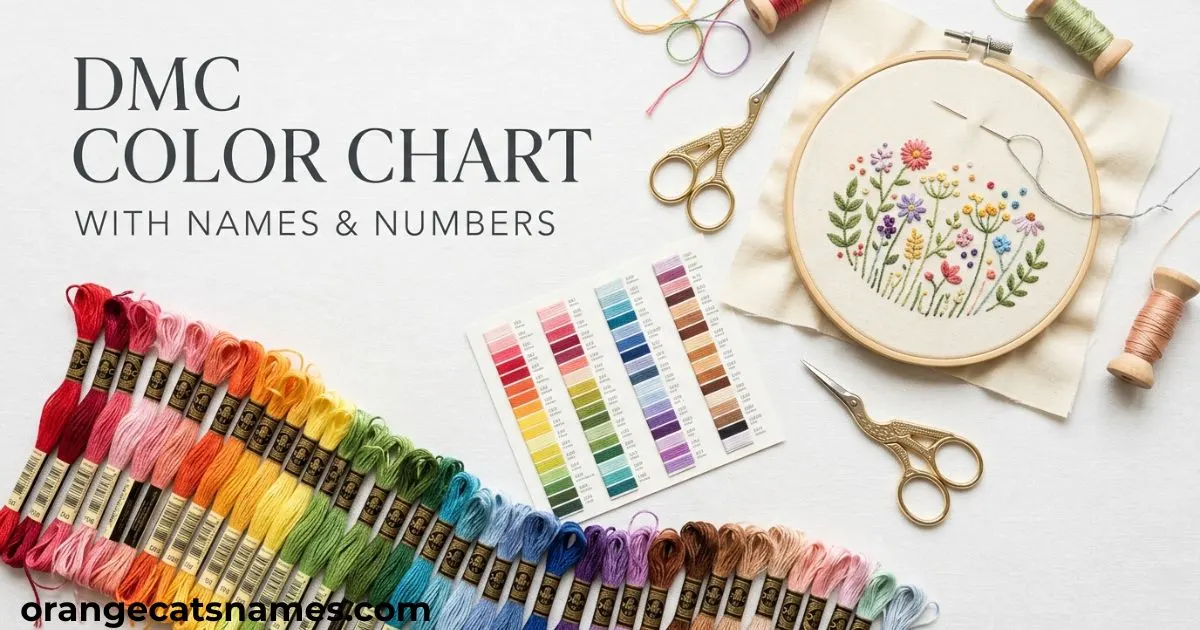
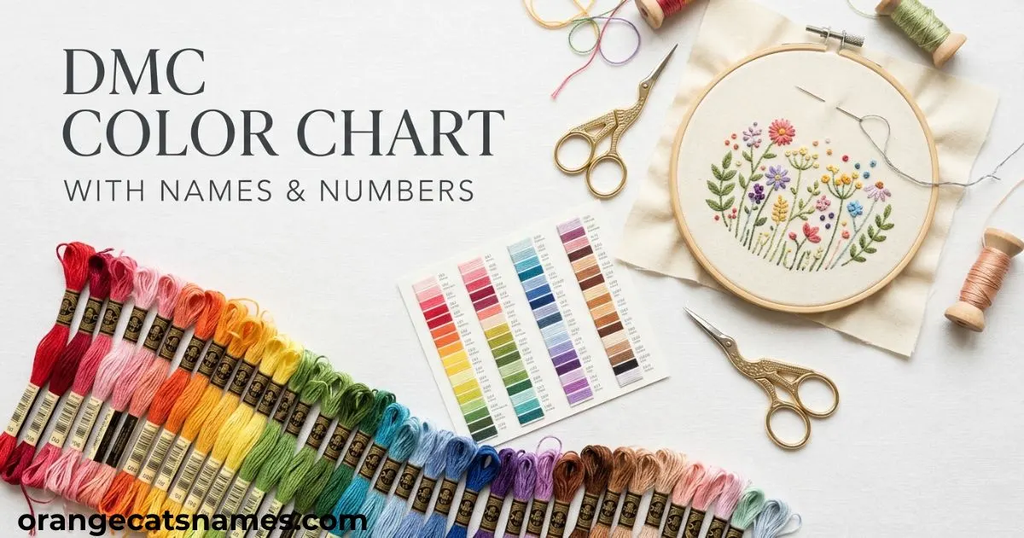
Finding the right DMC embroidery floss shouldn’t mean squinting at a tiny printed card or scrolling through a pattern key wondering which “dark green” the designer meant. This DMC color chart with names and numbers lets you look up any DMC floss by code, color name, or shade, so you can match the thread in your cross stitch or embroidery pattern with confidence.
Search a code you already know, like 310, or browse by color family when you only have a general shade in mind. Each entry shows the thread number, the color name, and a color swatch so you can compare nearby options before you buy or stitch.
Search the DMC Floss Color Chart
Type a number or color name into the search box to jump straight to that thread. You can sort the list by number or by name, and filter by color family when you’re choosing between similar shades.
When you’re following a pattern, always search by the code and not by how a color looks on your screen. Two shades can look nearly identical on a monitor and still be completely different threads. The number is the one piece of information that never changes, which is why designers list it in every pattern key.
DMC Thread Colors by Number
A DMC number is an identifier for one specific shade of thread. It is not a scale. A higher number doesn’t mean a darker, lighter, brighter, or warmer color, and neighboring numbers are often unrelated. DMC 310 is Black, while the code right next to it in the catalog has no connection to it. Numbers were assigned as the range grew over time, which is why a single color family can be scattered across the whole list.
This is why a pattern’s color key matters. If your pattern says 666, you want exactly 666, which is a bright red, and not “something red.” Replacing a code with a similar-looking one can change the finished piece more than you’d expect, especially in areas with shading.
Not every entry is a plain number. Look for these special listings:
- BLANC is DMC’s standard white.
- ECRU is a soft, creamy off-white.
- B5200 is Snow White, a very bright, crisp white.
Always copy a code exactly as your pattern lists it, including letters. If you’re typing codes into a shopping list or a spreadsheet, keep these entries in their original form so you don’t confuse a white with a numbered thread.
DMC Thread Colors by Name
If you remember a shade but not its number, searching by name is the fastest route. DMC names are descriptive, and many include a tone word that tells you where the color sits in a family: very light, light, medium, dark, very dark, or ultra dark.
For example, you might see several entries that share a base name, such as a series of blues or greens, each with a different tone word. These are separate threads with separate numbers. Read the full name and the number together before you add anything to your basket. A skein labeled “light” in one family may be closer in value to a “medium” in another, so names help you narrow the search, but they shouldn’t be your only check.
Names are also useful when you’re reading a pattern that lists names alongside codes. If the two don’t agree, trust the code, then use this chart to see which name belongs to it.
Free Printable DMC Color Chart PDF
A printed DMC color chart is handy when you’d rather not reopen a website every time you check a code. Keep it beside your thread box, clip it to your pattern, or bring it to the craft store so you can check a shade without relying on a phone signal.
The PDF matches the chart on this page, with the number, name, and swatch for each thread. To get a readable copy:
- Print at 100% scale, not “fit to page,” so the labels stay legible.
- Use a printer setting that suits color documents.
- Store it flat or in a sheet protector if you handle it with thread-dusty hands.
Keep in mind that a printed digital chart is still an approximation. Printers, ink, and paper all change how a color looks, so use the printout to identify and shortlist threads, not to judge an exact match. When the shade really matters, compare it against a real skein.
How Many DMC Floss Colors Are There?
DMC’s official US printed color card lists 489 colors of six strand embroidery floss. That is the standard cotton range most cross stitchers and embroiderers mean when they say “DMC floss.”
DMC also lists other ranges separately, including Color Variations (variegated floss), Light Effects, Satin, and metallic pearl thread. These aren’t counted in the 489, and they behave differently in the needle, so a chart that mixes them with standard cotton can be confusing.
If you’ve seen different totals on other websites, that’s usually why. Some charts include specialty threads, some include older or regional entries, and some are simply out of date. This chart covers [standard six strand cotton floss only]. For the manufacturer’s own reference, see the official DMC printed color card.
Browse DMC Colors by Family
If you’re building your own design, choosing shades for a pattern with no key, or looking for something that sits well beside thread you already own, browsing by family is faster than scanning the whole list. Here’s how to think about each group.
Reds, Pinks, and Oranges
Reds are some of the most commonly stitched colors and also some of the easiest to mix up. A true bright red like 666 reads very differently from a deeper red like 321, and both are far from a garnet such as 816. Pinks run from pale baby tones like 818 to rich, saturated pinks. Oranges sit between red and yellow, and small shifts in the thread can push them toward coral or toward gold.
When you’re choosing within this family, lay your candidates next to each other under daylight. Reds especially can look different under warm indoor bulbs.
Yellows and Golds
Yellows range from pale, buttery shades like 744 and 745 to deeper golds and straw tones like 3820. Yellow threads can look flat on a light fabric, so it helps to check them against your actual background. Golds and ambers work well for autumn leaves, wheat, and warm highlights.
Greens and Turquoise
Greens are among the largest families in the range. You’ll find yellow-greens such as 703, vivid greens like 702, and very dark, cool greens like 561. For leaves, stems, and landscapes, many stitchers use three or more greens from the same family to give depth, so check the whole set together instead of choosing one at a time. Turquoise and teal shades sit between green and blue and are useful for water and sky.
Blues and Navy
Blues run from pale sky tones to deep navy. Royal blues like 797 and darker relatives like 796 are popular for borders and lettering. When you’re matching blues, pay attention to whether a shade leans green or purple, because those undertones show more once the thread is stitched against fabric.
Purples and Lavenders
Purples cover lavender, lilac, plum, and deep violet. They’re often used for flowers such as lavender, pansies, and wisteria. Light purples can read as gray under dim light, so test them in good lighting before committing to a large area.
Browns and Beiges
Browns and beiges are workhorses for hair, wood, animals, and earthy backgrounds. They span cream-leaning tans through coffee tones, including very dark shades like 938. Many of them are close in value, so it’s worth comparing neighbors carefully when you need a clear contrast between, say, a hair color and a skin tone.
Grays, Black, and White
This family includes everything from soft pearl grays like 762 through pewter shades like 413 up to very dark grays like 3799, plus black (310) and the whites (BLANC, ECRU, B5200, and softer options like 3865, Winter White). Whites and near-whites vary more than most people expect, so compare them against your fabric before you start.
Names and family labels help narrow the list, but always look at the actual swatch before you decide.
DMC HEX and RGB Color Codes
HEX and RGB values describe colors for digital displays. A HEX code is a six-character value, usually written with a number sign in front, and RGB lists the amounts of red, green, and blue that make up a color. Designers and software use them to reproduce a color on a screen.
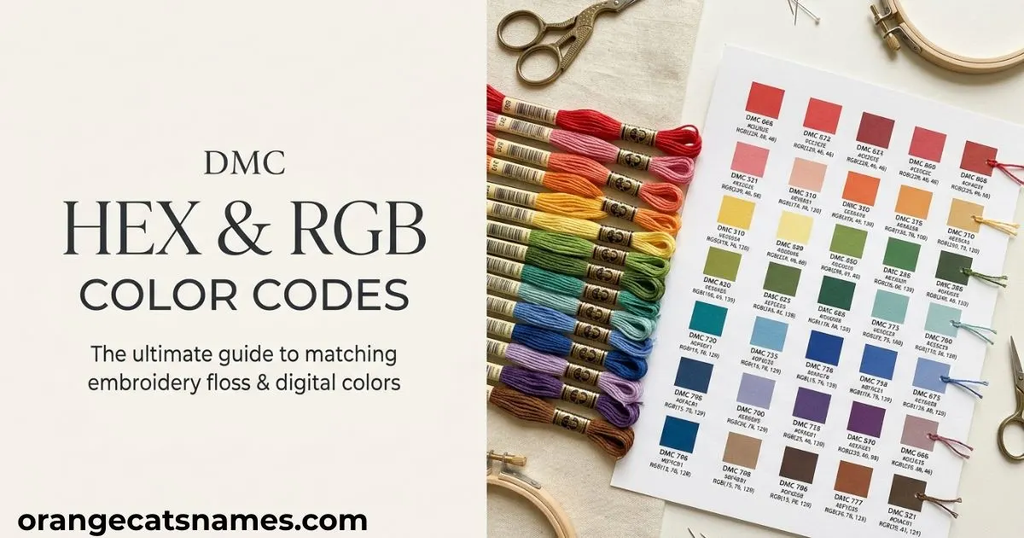
For stitchers, they’re useful in a few situations:
- Estimating which DMC thread is closest to a color in a photo or graphic
- Building a digital pattern in software that maps colors to threads
- Matching a color on a website, logo, or design to a thread
The important limit is that HEX and RGB values describe how a color looks on a screen, not how a physical thread looks in your hand. A monitor’s brightness, your phone’s display mode, the room’s lighting, the color of your fabric, and the sheen of the thread all change the result. Cotton floss also has a slight natural texture that reflects light differently from a flat screen swatch.
Treat any digital value as a starting point. Use it to shortlist two or three threads, then check them in person. If you need an exact match, a physical DMC color card with real thread samples is the most reliable reference.
How to Find a Similar DMC Thread Color
Sometimes a pattern calls for a color you can’t find, a shop is out of stock, or you want to change a shade to suit your own taste. Here’s a simple way to choose a close alternative:
- Start with the original. Note the code and full name from your pattern, then find it in the chart.
- Check nearby shades in the same family. Look at the swatches around it, paying attention to whether you need something lighter, darker, warmer, or cooler.
- Compare in daylight. Hold the skeins against your fabric near a window. Artificial light can hide differences.
- Think about the color’s role. Decide how important this shade is to the design.
That last step matters most. A slightly different green in a background hedge will barely be noticed. The same difference in a face, a lettered word, or a smooth gradient can be obvious. For high-visibility areas, match the original as closely as you can. For filler areas, you have more room to substitute.
If you’re replacing one shade in a series, such as the light, medium, and dark of a single color, check all three together. Changing only one can throw off the contrast and make the design harder to read.
Match DMC Colors to a Cross Stitch Pattern
Most cross stitch patterns include a color key, also called a legend, that lists each thread used. The key usually shows a symbol, a DMC code, and often a color name and the number of skeins needed.
To match a pattern quickly:
- Go through the key and write down each DMC code.
- Look up every code in the chart and confirm the name matches.
- Check your thread stash for any you already own.
- List the missing colors and buy those.
It helps to remember what the symbols mean. A symbol identifies a thread inside that single pattern only. The same symbol can mean different colors in a different pattern. The DMC number is the universal part, and it tells you which shade the designer actually intended.
If you’re working from a photo instead of a pattern, digital matching is only an estimate. Photos change colors through lighting, camera settings, and editing, so use the chart to shortlist options and compare them against a real skein before you stitch.
DMC to Anchor Conversion Chart
Plenty of stitchers have a stash of Anchor thread, or find Anchor easier to buy locally, while their pattern lists DMC colors. A conversion chart pairs each DMC number with the closest Anchor equivalent so you can substitute without starting over.
Conversions are guides, not guarantees. DMC and Anchor use different dye formulas and numbering systems, and some DMC shades have no exact Anchor counterpart, so the closest match can be slightly lighter, darker, or warmer. A mismatch you won’t notice in one stitched flower might stand out across a large field of the same color.
To get the best results:
- Compare real skeins side by side, in daylight, before committing.
- Keep your original pattern code in your notes so you can return to it.
- Convert a whole set of related shades the same way, so contrast stays consistent.
- For large areas or critical colors, consider buying the DMC thread instead.
Standard Floss vs. Specialty Threads
When most patterns say “DMC,” they mean standard six strand cotton floss. It’s a mercerized cotton thread made of six loosely twisted strands that you separate and recombine to suit your fabric. It’s the right choice for general cross stitch and surface embroidery.
DMC also makes specialty ranges:
- Color Variations, a variegated floss that shifts color along the strand
- Light Effects, which add a gleaming, glow-like finish
- Satin, a smooth, high-sheen thread
- Metallic and pearl threads, used for sparkle and texture
These behave differently from cotton. Metallics can be stiff and prone to fraying, satin threads catch the light and can twist, and variegated floss changes the look of a motif as you stitch. Even when the color seems similar, a specialty thread won’t look like standard cotton. Check the thread type in your pattern before you substitute one for another, and keep the two kinds clearly separated when you search a chart.
Tips for Stitching With DMC Floss
A good color choice only goes so far if the thread isn’t prepared well. A few habits make DMC floss easier to work with:
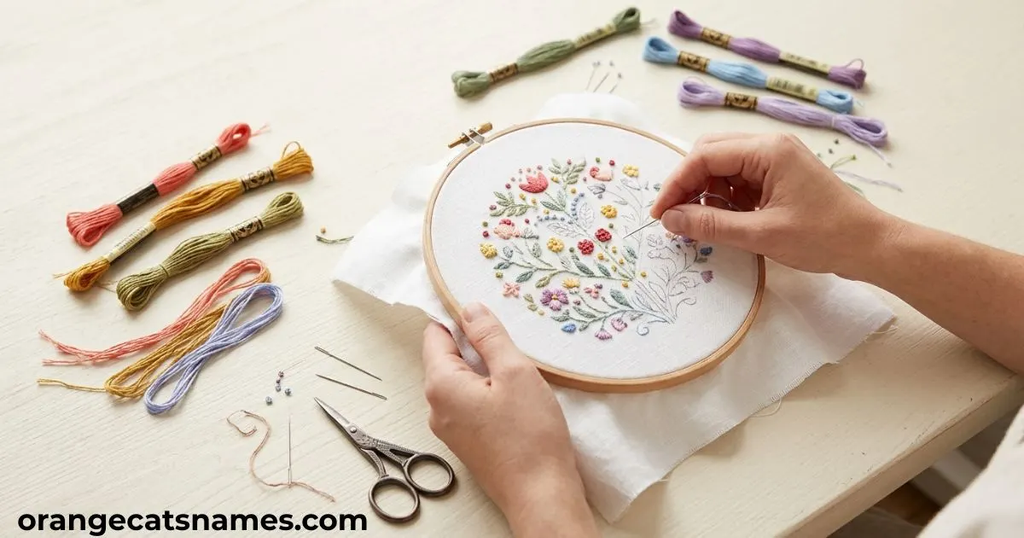
- Know the skein. A standard skein holds roughly 8 meters (about 8.7 yards) of thread made of six strands.
- Separate the strands. Pull out single strands and put them back together, rather than pulling them all at once. This reduces tangling and gives smoother coverage.
- Match strands to fabric. Two strands on 14-count Aida is a common starting point for cross stitch. Finer fabrics and detail work often use fewer strands. Check your pattern’s recommendation.
- Use manageable lengths. Cutting about 18 inches (45 cm) helps limit knots and fuzzing.
- Handle with care. Thread-dusty or lotion-slick hands can mark pale shades such as whites and creams, so wash up before working with light colors.
- Keep the label. Don’t discard the paper band until you’ve finished the project. It has the number you may need for a refill.
Tips for Organizing Your DMC Thread Collection
The more patterns you stitch, the faster a thread collection grows. A little organization saves you from buying the same color twice or hunting for one skein.
- Sort by number if you stitch from patterns. Since pattern keys use codes, numerical order lets you find a thread in seconds.
- Sort by color family if you design your own work. This is easier when you’re choosing shades by eye.
- Label loose skeins. Write the code on a bobbin or tag so a number never gets lost when a band falls off.
- Keep an inventory. A simple list or spreadsheet with the code, name, and a quick note on whether you have enough for another project prevents duplicate purchases.
- Check your stash before you shop. Compare your list against a new pattern’s key and buy only what’s missing.
- Store thread flat or on bobbins. Keeping it out of direct sunlight helps preserve its color.
A searchable chart and a short inventory together make planning your next project much quicker.
FAQs
Where can I find a DMC color chart with names and numbers?
Use the searchable chart on this page to look up any thread by its code or color name. DMC also sells an official printed color card.
Is there a free printable DMC color chart?
Yes. You can download the free printable DMC color chart PDF from this page. DMC’s physical color card is a separate product sold by the manufacturer.
How many DMC embroidery floss colors are there?
DMC’s US printed color card lists 489 colors in its standard six strand embroidery floss collection. Color Variations, Light Effects, Satin, and metallic threads are listed as separate ranges.
Can I find a DMC color by name?
Yes. Search the name, then confirm the number and full name against your pattern or skein label. Because many names share a base word, always check the code.
What does a DMC number mean?
It’s an identifier for one specific thread shade. It isn’t a scale from light to dark, so a higher number doesn’t mean a darker or brighter color.
Are online DMC colors exact?
No. Digital swatches are visual guides. Screens, lighting, fabric, and thread finish all change how a shade looks, so compare physical thread when accuracy matters.
How do I find a DMC color that matches a photo?
Use the HEX or RGB value as an estimate, shortlist two or three close swatches from the chart, and compare them against real skeins in daylight.
Can I replace DMC with Anchor thread?
A conversion chart can suggest a close color, but the match may not be exact. Compare the actual skeins side by side before you stitch.
What do BLANC, ECRU, and B5200 mean?
BLANC is DMC’s standard white, ECRU is a creamy off-white, and B5200 is a bright Snow White. They’re listed by name or letter code instead of a three-digit number.

Liam Anderson is a passionate cat lover and the creator of OringeCatsNames. He enjoys sharing unique orange cat name ideas, pet tips, and helpful content to make life easier for cat owners around the world.