Japanese Boy Names That Start With K 150+ Meaningful Picks
Japanese boy names that start with K include familiar choices such as Kaito, Kai, Kenji, Kenta, Kazuki, Kazuya, Kota, Koji, and Kiyoshi. They can evoke the ocean, harmony, strength, peace, nature, wisdom, or light, depending on the name and its kanji.
If you are searching for a Japanese baby boy name for an American family, the hardest part is often not finding possibilities but understanding what they actually mean. A Romanized name can have multiple kanji spellings, so this guide focuses on pronunciation, written forms, cultural context, traditional and modern styles, and practical choices you can confidently explore.
Japanese Boy Names That Start With K
Japanese boy names beginning with K offer an unusually broad range of sounds and associations. Some feel short and modern, such as Kai or Koki, while others have a more traditional structure, including Kenji, Kenta, Kazuo, Keitaro, and Kentaro. Names connected with ocean, harmony, health, courage, purity, and victory appear repeatedly in naming resources.
One important point makes Japanese naming different from many English-language naming lists: the sound alone does not always determine the meaning. A name such as Kaito may be written with different kanji, and those characters can change its interpretation. When choosing a real baby name, therefore, treat the spelling, reading, meaning, and cultural usage as connected parts of the decision.
Popular K Names at a Glance
If you want a familiar starting point, Kaito, Kai, Kenji, Kenta, Kazuki, Kazuya, Kota, Koji, Kiyoshi, Kohei, Keita, Kengo, and Kenzo are useful names to investigate. They cover several styles, from traditional Japanese names to shorter choices that can be relatively straightforward for English-speaking families.
| Name | Commonly seen kanji example | Meaning or association | Style |
| Kaito | 海翔 | Sea + soaring/flying | Modern |
| Kai | 海 | Sea/ocean | Short |
| Kenji | 健二 | Health/strength + second | Traditional |
| Kenta | 健太 | Healthy, strong | Classic |
| Kazuki | 和希 | Harmony + hope | Gentle |
| Kazuya | 和也 | Harmony/peace | Traditional-modern |
| Kota | 幸太 | Happiness/fortune + great | Friendly |
| Koji | 康二 | Health + second | Traditional |
| Kiyoshi | 清 | Pure, clear | Classic |
| Kosei | 光星 | Light + star in one common form | Bright |
| Kengo | 健吾 | Strength/health association | Strong |
| Keita | 慶太 | Blessing/celebration + great | Classic-modern |
| Kohei | 康平 | Health/peace association | Calm |
| Kenzo | 健三 | Healthy/strong + third in one common form | Distinctive |
| Kyohei | 恭平 | Respect + peace in one common form | Refined |
These are examples of kanji combinations rather than universal definitions. Japanese given names can have several written forms, and the characters chosen by a family determine the precise written meaning. That distinction is particularly important when using English-language baby-name websites.
Trendy K Names and Their Vibe
Modern naming lists often group K names around short sounds, vivid nature imagery, and positive qualities. Kyo, Kengo, Kage, Kazuto, Kaimu, Kaito, Kiyoshi, Kenta, Keitaro, Kyohei, Kenzo, and Katsuro illustrate how different a K name can feel depending on its sound and written form.
| Name | Common association or theme | Overall impression |
| Kyo | Cooperation/capital associations | Short |
| Kengo | Strength/bravery | Bold |
| Kage | Shadow | Mysterious |
| Kazuto | Harmony | Balanced |
| Kaimu | Dream/wish association | Gentle |
| Keitaro | Blessing | Traditional-modern |
| Kyota | Capital/city association | Contemporary |
| Kanato | Strength/power associations | Strong |
| Katsuya | Victory | Confident |
| Kyohei | Peace/cooperation | Calm |
| Kensuke | Humility/modesty | Traditional |
| Kenzo | Strength/wisdom associations | Stylish |
| Katsuro | Victory | Classic |
A name’s “vibe” should not be confused with its literal Japanese meaning. English descriptions can simplify complicated kanji combinations, and the same pronunciation can be represented by different characters. For a fictional character, atmosphere may be your priority; for a real child, the actual Japanese writing deserves much more attention.
Beautiful K Names for Different Personalities
One useful way to narrow a large list is to start with the quality or image you want the name to suggest. Kenta, Kenki, and Katsuya can fit a strength-oriented theme; Kiyoto, Kyoshi, and Kazuma can suggest calmness; while Kaisei, Kairi, and Kosei offer imagery connected with nature, sky, stars, or water.
| Desired feeling | Names to explore |
| Strong | Kenta, Kenki, Katsuya |
| Calm | Kiyoto, Kyoshi, Kazuma |
| Bright | Koki, Ko, Kaisei |
| Nature-inspired | Kairi, Katsura, Kaisei |
| Traditional | Kenta, Kanji, Keiichi |
| Ocean-inspired | Kai, Kaito, Kairi |
| Short | Kai, Ko, Kyo |
| Distinctive | Kenzo, Kaisei, Kiyoto |
Think of this table as a shortlisting tool, not a ranking. The best match depends on whether you care most about sound, written meaning, cultural familiarity, family heritage, or how easily relatives and friends in the United States will pronounce it.
Modern K Names Worth Considering
Modern does not necessarily mean newly invented. A name may sound contemporary because it fits current preferences for shorter, energetic or nature-associated sounds even when its kanji and history are older. Kaito, Kai, Koki, Kairi, Kosei, Kaisei, Kiyoto, Kira, and Kazuki illustrate that mixture.
| Name | Common theme | Impression |
| Kaito | Sea/soaring | Energetic |
| Kai | Sea | Minimal |
| Koki | Brightness/hope | Cheerful |
| Kairi | Ocean-related | Contemporary |
| Kosei | Light/sky associations | Open |
| Kaisei | Sea/stars in common interpretations | Imaginative |
| Kiyoto | Purity | Calm |
| Kazuki | Harmony/hope | Warm |
| Kira | Shining | Compact |
| Keizo | Blessing | Traditional-modern |
For an American household, pronunciation is another practical consideration. Short names such as Kai can be easy to say immediately, while longer names such as Kentaro or Kazuhiro may require a little more explanation. Neither is inherently better; the important question is whether the name works naturally in the environments where your child will use it.
Rare-Feeling K Names
If common names do not feel personal enough, you may encounter unusual choices such as Kisen, Kogane, Kuno, Kijuro, Kensho, Keizo, Kairo, Katori, Kenki, Katsura, and Kanji. However, “rare” should always be treated carefully because an English-language audience and Japanese families may have very different ideas about how familiar a name is.
| Name | Common association | Possible use |
| Kisen | Joy/fountain association | Poetic |
| Kogane | Gold | Nature/value imagery |
| Kuno | Free/wild | Character or distinctive choice |
| Kijuro | Strong son association | Traditional character |
| Kensho | Humility/modesty | Gentle |
| Keizo | Blessing | Classic |
| Kairo | Ocean/calm | Nature-inspired |
| Katori | Bird/light association | Symbolic |
| Kenki | Strong will | Determined |
| Katsura | Tree | Nature-inspired |
| Kanji | Strength/perseverance association | Character-focused |
Before choosing an unusual Japanese name for a real child, verify that the proposed pronunciation and kanji combination are actually used as a given name. A name appearing on an English naming website is not automatically evidence that it is conventional Japanese usage.
25 More Japanese K Boy Names
If you prefer browsing a larger pool before creating a shortlist, these additional names provide a useful starting point. The descriptions are intentionally cautious because kanji can change the meaning of a Romanized name.
| Name | Common theme or association |
| Kaito | Sea, ocean, soaring |
| Kai | Sea, ocean |
| Kazuki | Harmony, hope |
| Kenji | Strength, health, or second depending on kanji |
| Kenta | Health, strength |
| Kota | Happiness, fortune |
| Koji | Second/health-related forms |
| Kiyoshi | Pure, clear |
| Kazuo | Harmony/man association |
| Kazuya | Harmony, peace |
| Keisuke | Help/support associations |
| Kaname | Vital point, cornerstone |
| Kaoru | Fragrance |
| Ken | Strength/health |
| Kengo | Strength/bravery |
| Koichi | Light/one associations |
| Keitaro | Blessing |
| Kensuke | Humility/modesty |
| Kenzo | Strength/wisdom associations |
| Katsuya | Victory |
| Kyohei | Peace/cooperation |
| Koki | Brightness/hope |
| Kiyoto | Purity |
| Kaisei | Sea/stars associations |
| Kairi | Ocean-related associations |
If you are choosing for a baby, use this larger list only as the beginning of your research. Confirm the exact kanji and reading before treating any listed definition as final.
Choosing Between Traditional and Modern K Names
For a classic Japanese feeling, names such as Kenji, Kiyoshi, Kazuo, Koji, Keiji, Kentaro, and Keitaro can provide a more traditional direction. Names such as Kaito, Kai, Kazuki, Koki, Kairi, and Kaisei may feel more contemporary or internationally accessible.
The distinction is not absolute. Japanese naming styles change across generations, and a name’s impression depends on the exact kanji, the person’s age, regional context, and the names currently familiar to Japanese families. Rather than forcing a name into a “traditional” or “modern” box, consider which sound and written form fit your family’s story.
Japanese K Names Inspired by Nature
Nature is a recurring theme in Japanese naming, and K names provide plenty of examples. Kai and Kaito can be associated with the sea in particular kanji forms, while Kairi, Kaisei, Kosei, Katsura, Katori, Kogane, and Kaoru can evoke water, sky, trees, birds, gold, or fragrance.
| Name | Nature association |
| Kai | Sea/ocean |
| Kaito | Sea + soaring in 海翔 |
| Kairi | Ocean-related interpretations |
| Kaisei | Sea/stars in common descriptions |
| Katsura | Tree |
| Katori | Bird/light associations |
| Kosei | Sky/light associations |
| Kogane | Gold |
| Kaoru | Fragrance |
Nature-based names can be emotionally appealing because they give a name an image without directly describing a personality trait. If you love the sea, sky, trees or natural beauty, checking the exact kanji can help you choose a written form that expresses that connection accurately.
Japanese K Names Associated With Strength and Courage
If you want a boy’s name connected with resilience, health, courage or victory, explore Ken, Kenta, Kengo, Katsuo, Katsuya, Katsuro, Kenki, Kanji, Kenzo, and Kenshin. The exact interpretation still depends on the characters, but these names repeatedly appear in competitor material around strength-oriented themes.
| Name | Common strength-related association |
| Ken | Strong, healthy |
| Kenta | Healthy, strong |
| Kengo | Strong, brave |
| Katsuo | Victory |
| Katsuya | Victory |
| Katsuro | Victorious son |
| Kenki | Strong will |
| Kanji | Perseverance/strength association |
| Kenzo | Strong/wise associations |
| Kenshin | Modesty/truth associations |
For parents, a strength-related name can represent a hope rather than a prediction. A name associated with health or courage does not determine a child’s personality; it simply gives parents a meaningful symbol they may want to carry into the child’s story.
Japanese K Names Associated With Peace and Harmony
Not every strong-sounding name needs to feel aggressive. Kazuki, Kazuya, Kazuo, Kazuma, Kazuhiro, Kohei, Kyohei, Kazuto, Kyoshi, and Kiyoshi are useful names to investigate when you prefer themes such as harmony, peace, cooperation, calmness or purity.
| Name | Common theme |
| Kazuki | Harmony/hope |
| Kazuya | Harmony/peace |
| Kazuo | Harmony |
| Kazuma | Harmony/truth |
| Kazuhiro | Broad harmony |
| Kohei | Peace/calm |
| Kyohei | Cooperation/peace |
| Kazuto | Harmony |
| Kyoshi | Calm/respect associations |
| Kiyoshi | Purity/clarity |
These names demonstrate why meaning should be researched through kanji rather than English glosses alone. The same pronunciation may be written differently, and a different character combination can shift the emphasis from harmony to another concept.
What Should You Check Before Choosing a Japanese K Name?
Start with the exact kanji. A Romanized spelling tells you how a name is commonly represented in English, but it does not necessarily tell you its complete written meaning. Next, confirm the pronunciation and check whether the kanji combination is actually used as a Japanese given name.
For a U.S. family, say the complete name aloud with the surname and consider how teachers, relatives and friends may pronounce it. If the child will also be registered in Japan, investigate current Japanese naming rules. Japan began recording name readings in the family register on May 26, 2025.
A practical checklist is:
- Confirm the Japanese characters.
- Verify the intended reading.
- Check the meaning of each kanji.
- Confirm that the combination works as a given name.
- Consider pronunciation in American English.
- Say the complete first-and-last name aloud.
- Check whether the name has important cultural or historical associations.
- For registration in Japan, verify current reading requirements.
This extra research is worthwhile because a beautiful Romanized spelling can hide an entirely different written meaning.
A Note About Current Japanese Naming Trends
Current Japanese naming trends change quickly, so a name described as “popular” should always be tied to a particular year and data source. In 2025, Benesse’s Tamahiyo survey placed Ao (碧) at the top among boys by written name, while Meiji Yasuda’s survey placed Minato (湊) first by kanji. The leading spoken-name readings were different again.
That distinction matters when researching K names. A list that calls Kaito or Kenji “popular” may be describing broad familiarity rather than placing the name at the top of a current national ranking. Written kanji and spoken readings can produce different rankings because Japanese names can have multiple readings.
How Japanese Names Can Have More Than One Meaning
The clearest example is Kaito. One common written form is 海翔, where 海 relates to the sea and 翔 relates to soaring or flying. Another Kaito can use different characters, such as 海斗 or other combinations, changing the written interpretation.
The same principle applies to names such as Koki, Kazuki, Kenji, Kazuya, and many others. The Romanized sound is only one layer of the name. The kanji supplies another layer of meaning, visual identity, and cultural context.
| Romanized name | Why checking kanji matters |
| Kaito | Several written forms exist |
| Kenji | Different kanji can change interpretation |
| Koki | Multiple written combinations are possible |
| Kazuki | Different characters can alter the meaning |
| Kazuya | Written form determines the precise interpretation |
| Kosei | Several kanji combinations are possible |
| Kaisei | Meaning depends on the characters selected |
This is one of the most important lessons for anyone using an online Japanese naming list: never assume that one English definition applies to every person with the same Romanized name.
Best Japanese Boy Names That Start With K
If you want a manageable shortlist rather than hundreds of possibilities, begin with names that fit the qualities you value. Kaito offers vivid ocean and soaring associations in common forms; Kai is compact; Kenji has a familiar traditional feel; Kenta is straightforward; and Kazuki and Kazuya offer harmony-oriented interpretations in commonly cited forms.
| Name | Why explore it |
| Kaito | Familiar, energetic, ocean/soaring imagery |
| Kai | Very short and easy to pronounce |
| Kenji | Traditional and recognizable |
| Kenta | Strong, straightforward sound |
| Kazuki | Harmony and hope associations |
| Kazuya | Peaceful, balanced feeling |
| Keita | Compact traditional-modern sound |
| Kiyoshi | Pure, calm association |
| Kota | Friendly, concise sound |
| Kohei | Peaceful impression |
| Kenshin | Historical and character associations |
| Kenzo | Distinctive international sound |
| Koki | Bright, contemporary impression |
| Kaisei | Sea-and-stars imagery |
| Kairi | Ocean-inspired, contemporary feeling |
For an American audience, short names can sometimes be easier to introduce, pronounce and remember, but cultural authenticity should not be reduced to English convenience. If Japanese heritage is part of the reason you are choosing the name, the written form and cultural context deserve equal attention.
What are the most popular Japanese boy names starting with K?
Names frequently appearing across Japanese-name resources include Kaito, Kai, Kazuki, Kenji, Kenta, Kota, Kiyoshi, Koji, Kazuya, and Kosei. However, “popular” can mean different things depending on whether a source measures written kanji, spoken readings, a particular year, or a specific database.
What does Kaito mean in Japanese?
Kaito does not have one universal meaning because several kanji combinations can represent the same pronunciation. A commonly cited form, 海翔, combines 海, associated with the sea or ocean, with 翔, associated with soaring or flying. Other written forms produce different interpretations.
Is Kaito a Japanese boy name?
Yes. Kaito is a Japanese masculine given name and has multiple possible written forms, including 海翔 and 海斗. Its pronunciation is commonly represented in English as “Kaito,” while the exact written meaning depends on the kanji selected.
What does Kenji mean in Japanese?
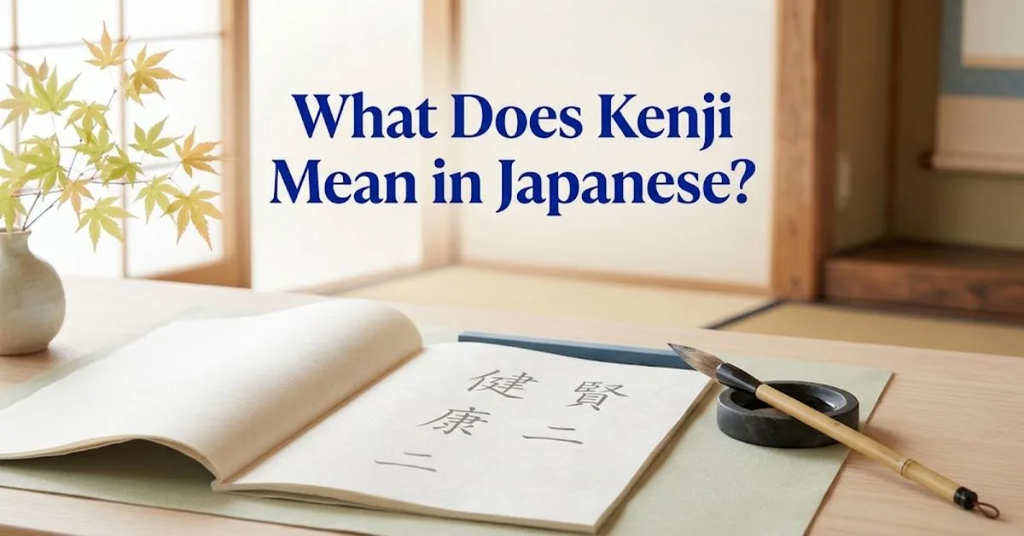
Kenji can be written with different kanji, so its meaning depends on the chosen characters. One commonly cited form is 健二, combining 健, associated with health or strength, with 二, meaning two or second. Other forms of Kenji can convey different meanings.
conclusion
Choosing from Japanese boy names that start with K can be exciting because the letter offers everything from short, modern choices like Kai and Kyo to familiar names such as Kaito, Kenji, Kenta, Kazuki, and Kazuya. Many also connect naturally with themes such as strength, harmony, nature, peace, courage, and the ocean.
The most important step is to look beyond the Romanized spelling. Japanese names can have multiple kanji combinations, meaning the same spoken name may carry different written meanings. Once you confirm the kanji, pronunciation, cultural context, and fit with your family name, you can turn a simple K-name search into a thoughtful and meaningful choice.
FAQs
What are some popular Japanese boy names that start with K?
Popular Japanese boy names starting with K include Kaito, Kai, Kenji, Kenta, Kazuki, Kazuya, Kota, Koji, Kiyoshi, and Kosei. Popularity can vary by year, spelling, and whether a source measures the written kanji or spoken name.
What does Kaito mean in Japanese?
Kaito can have different meanings depending on the kanji used. One common spelling is 海翔, where 海 means “sea” or “ocean” and 翔 conveys the idea of soaring or flying. Other kanji combinations can give Kaito a different written meaning.
Is Kaito a Japanese boy name?
Yes. Kaito is a Japanese masculine given name with several possible kanji spellings. Its exact meaning depends on the characters selected, so it is best to check the intended kanji rather than relying only on an English translation.
What does Kenji mean in Japanese?
Kenji has several possible kanji combinations. A common example is 健二, where 健 is associated with health or strength and 二 means “two” or “second.” Other spellings of Kenji can have different meanings.
What are unique Japanese boy names that start with K?
Some less-common or distinctive K names to explore include Kaisei, Kiyoto, Kairi, Kenzo, Kenshin, Kaname, Kogane, Kisen, and Katsuya. Before choosing an unusual name, verify its kanji, pronunciation, and actual usage in Japanese naming.
Are Japanese boy names starting with K easy to pronounce in English?
Some are relatively easy for English speakers, particularly short names such as Kai, Ko, and Kyo. Longer names such as Kentaro, Kazuhiro, and Keitaro may require occasional pronunciation guidance. The best choice depends on your family and how the name will be used.
Can the same Japanese name have different meanings?
Yes. Japanese names can have multiple kanji spellings, and different characters can change the written meaning while retaining the same or similar pronunciation. This is why the Romanized spelling alone is not enough to determine a Japanese name’s exact meaning.
What should I check before choosing a Japanese boy name?
Check the exact kanji, intended reading, meaning, pronunciation, cultural usage, and compatibility with the surname. If the name will be officially registered in Japan, also verify the current rules governing acceptable name readings.

Liam Anderson is a passionate cat lover and the creator of OringeCatsNames. He enjoys sharing unique orange cat name ideas, pet tips, and helpful content to make life easier for cat owners around the world.